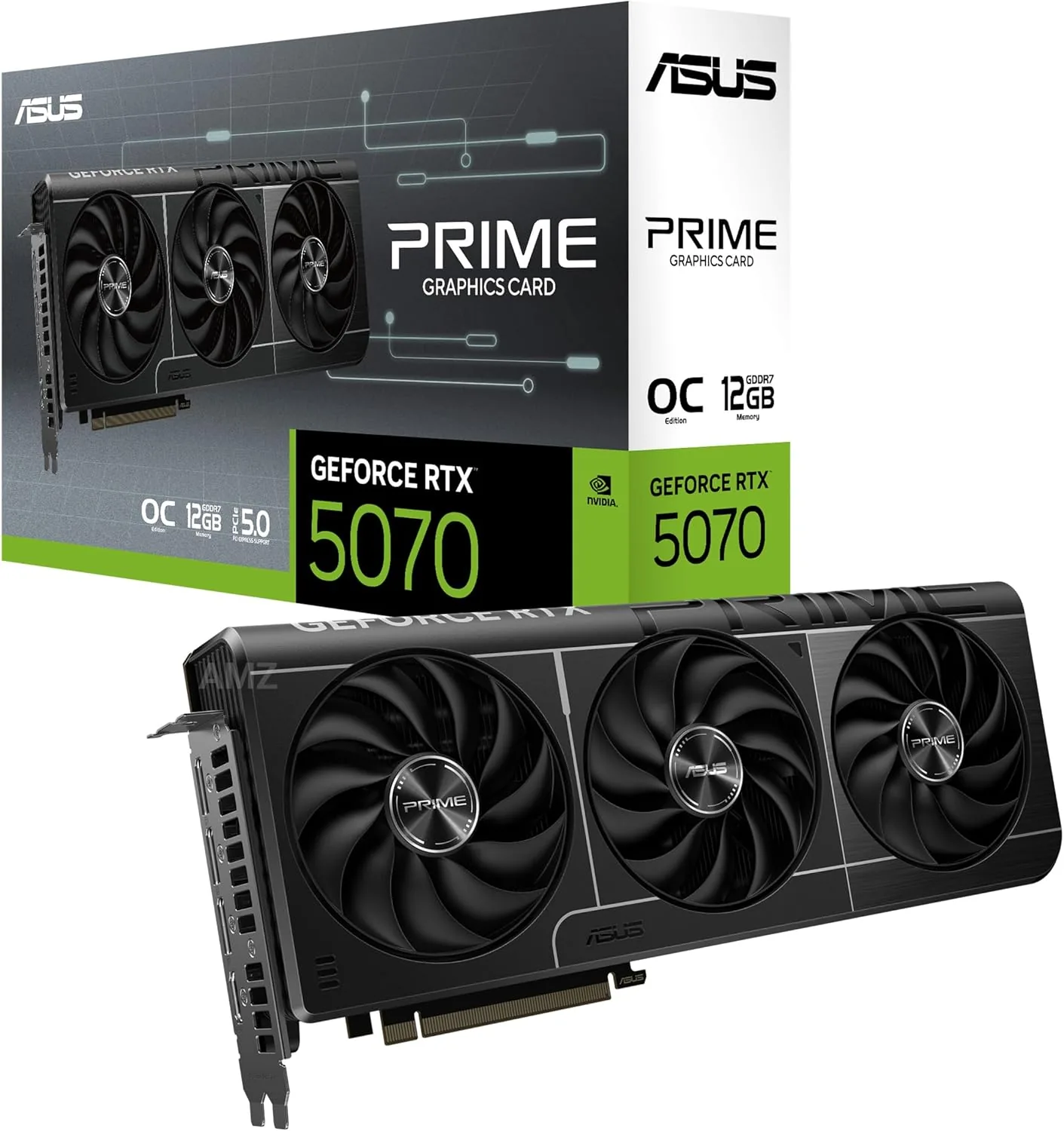
Best Overall
Asus Prime NVIDIA GeForce RTX 5070
Best for: 1440p high-refresh gaming
9.0/10View on Amazon →


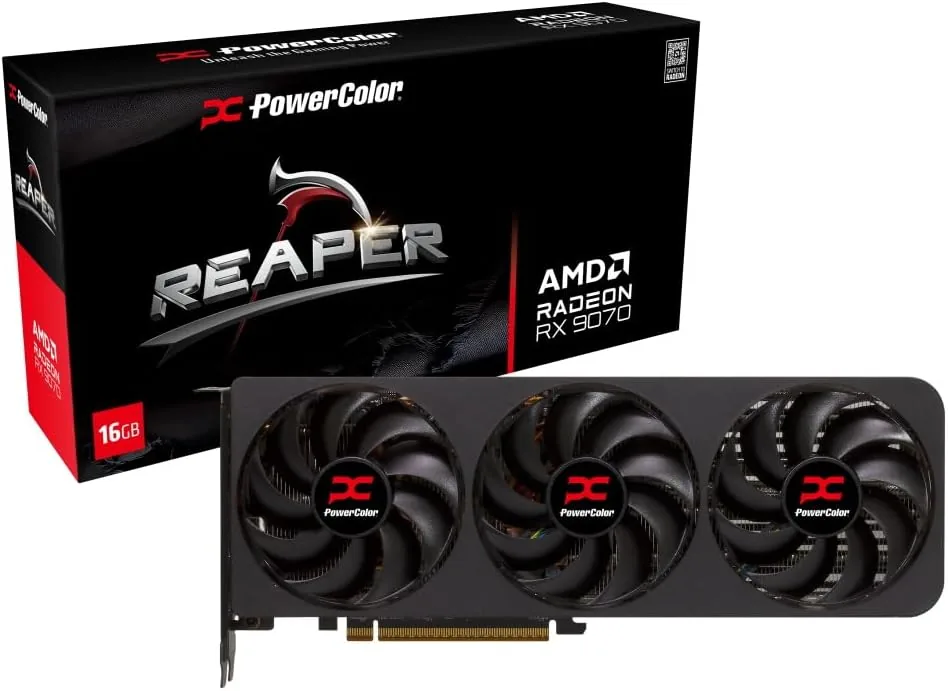
The RX 9070 uses the same RDNA 4 chip as the XT with fewer compute units and a lower power limit, so it runs cooler and quieter while still handling 1440p at high settings, with 16GB of VRAM to spare.
The Radeon RX 9070 is the quieter, more efficient sibling of the RX 9070 XT. It uses the same RDNA 4 chip and the same 16GB of memory, with fewer compute units enabled and a much lower power limit. The result is a card that runs cool and quiet while still handling 1440p at high settings.
The RX 9070 has 56 compute units to the XT's 64 and a 220W power limit instead of 304W. In published testing it's around 10 to 15% slower than the RX 9070 XT, and a few percent faster than NVIDIA's RTX 5070 in conventional games without ray tracing. That's plenty for high refresh rates at 1440p and playable 4K with upscaling.
Efficiency is its standout quality. Its performance per watt is among the best of any current graphics card, so it produces less heat and fan noise, which makes it a good choice for small cases and quiet PCs.
The RX 9070 has the same 16GB of GDDR6 on a 256-bit bus as the XT, giving it more memory than the 12GB RTX 5070. That headroom helps in recent games with large textures and makes the card a safer long-term buy.
FSR 4, AMD's machine-learning upscaler, is a big improvement on FSR 3, with image quality close to NVIDIA's DLSS. It's exclusive to RDNA 4 cards, and AMD's driver can upgrade many FSR 3.1 games to it automatically.
Ray tracing is much improved over AMD's last generation, but in demanding ray-traced games the RTX 5070 is usually faster.
PowerColor is one of AMD's longest-standing partners and makes only Radeon cards. Its RX 9070 models are triple-fan designs that stay quiet under load. Most RX 9070 cards use two 8-pin power connectors, and a good 650W power supply is enough.
The main catch is price. The RX 9070 is often sold for only a little less than the RX 9070 XT, and when the gap is small the XT is the better buy.
Buy the RX 9070 if you want 16GB of memory and strong 1440p performance in a cool, quiet card, or if your case or power supply is better suited to a 220W card. If the RX 9070 XT costs only slightly more, buy that instead.
| Architecture | AMD RDNA 4 |
|---|---|
| Compute units | 56 (3,584 stream processors) |
| Boost clock | Up to 2,520MHz (reference) |
| VRAM | 16GB GDDR6 |
| Memory speed | 20Gbps |
| Memory bus | 256-bit |
| Memory bandwidth | 640GB/s |
| Infinity Cache | 64MB |
| Interface | PCI Express 5.0 x16 |
| Total board power | 220W |
| Power connectors | 2x 8-pin (most models) |
| Upscaling | FSR 4 |
The RX 9070 uses the same RDNA 4 chip as the XT with fewer compute units and a lower power limit, so it runs cooler and quieter while still handling 1440p at high settings, with 16GB of VRAM to spare. It earns our Best Efficient AMD award in our guide to the best graphics cards.
Check price on Amazon →Best for: 1440p high-refresh gaming
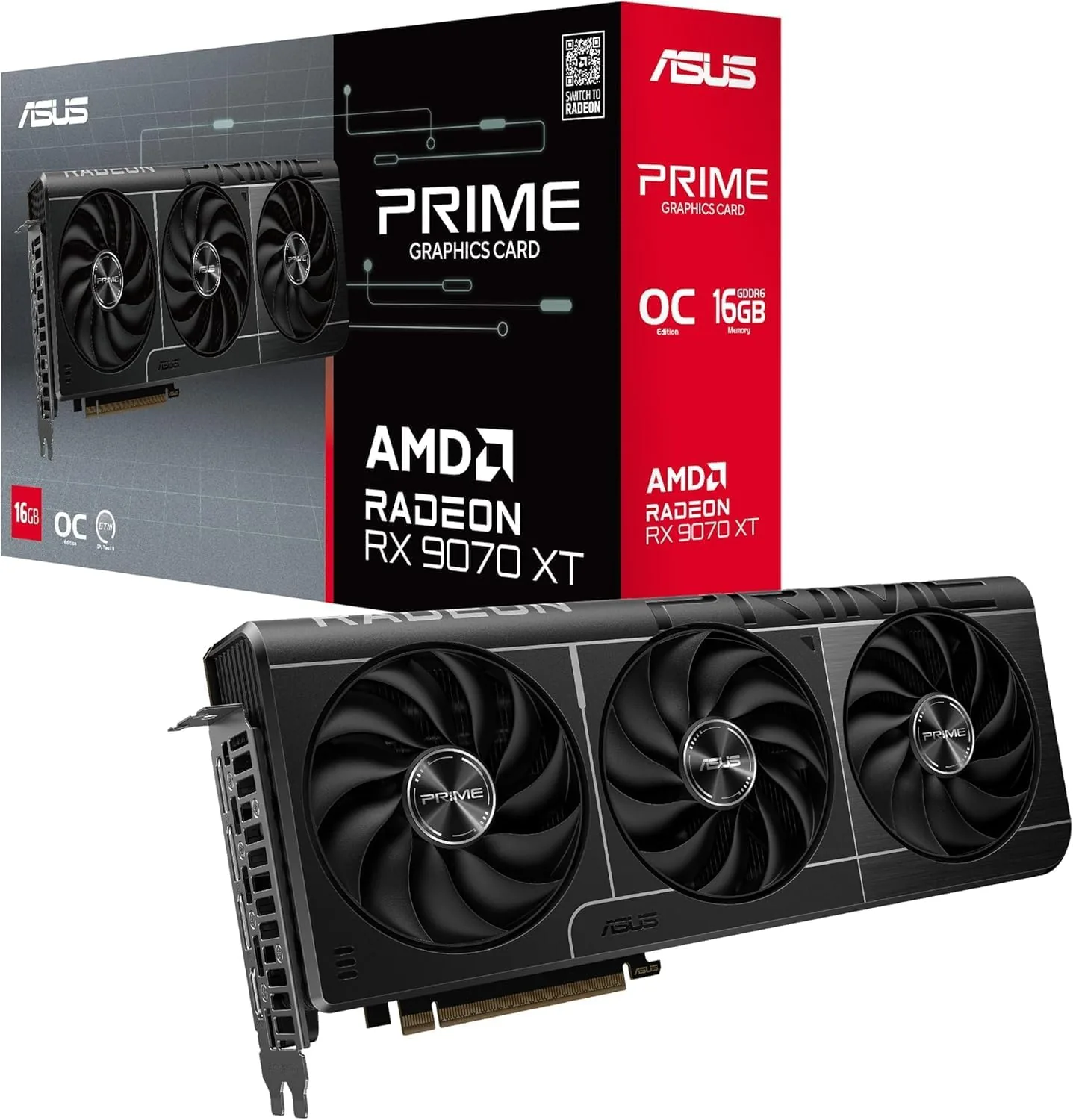
Best for: 1440p and entry-level 4K gaming
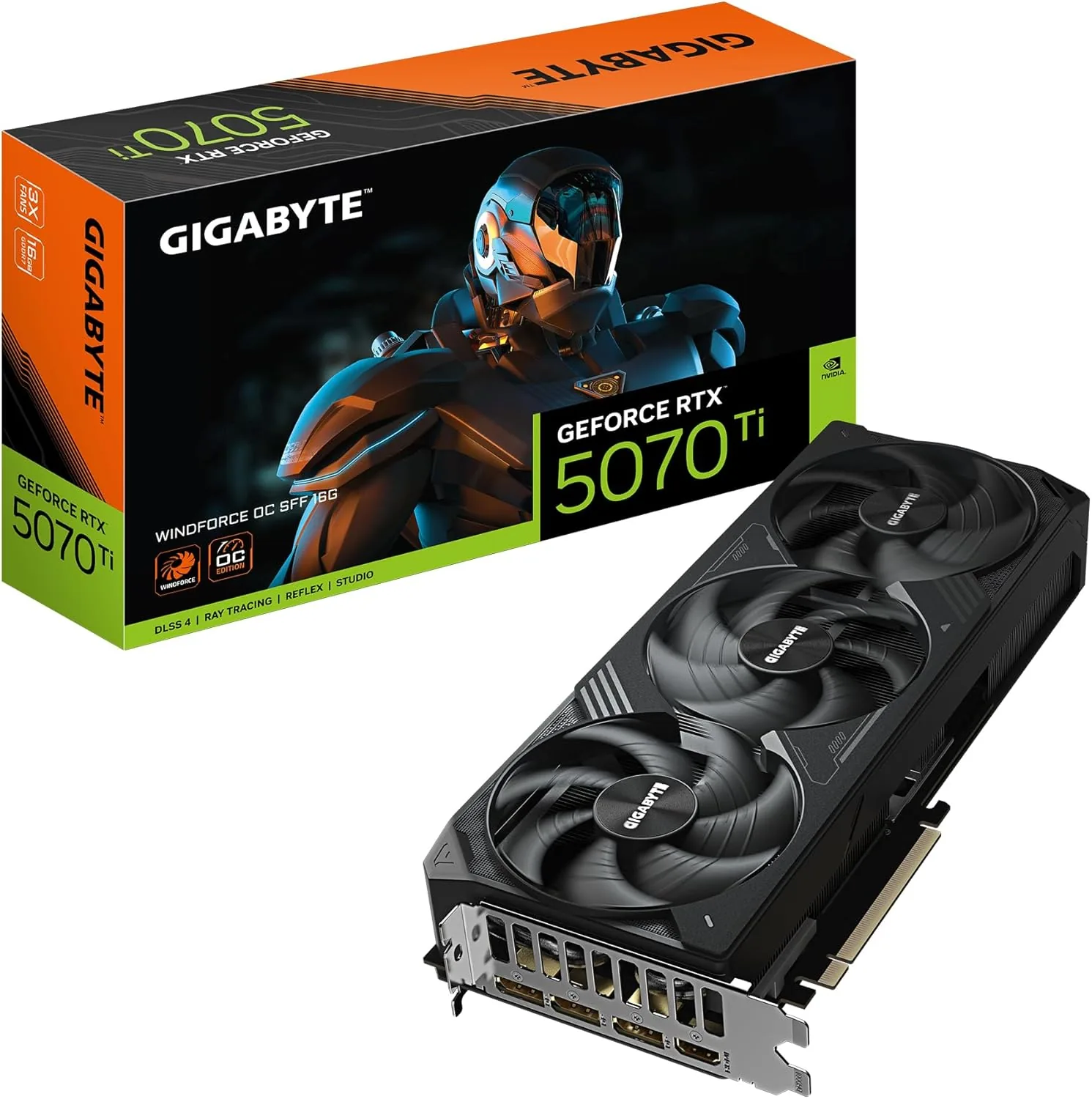
Best for: Maxed-out 1440p and 4K with DLSS